
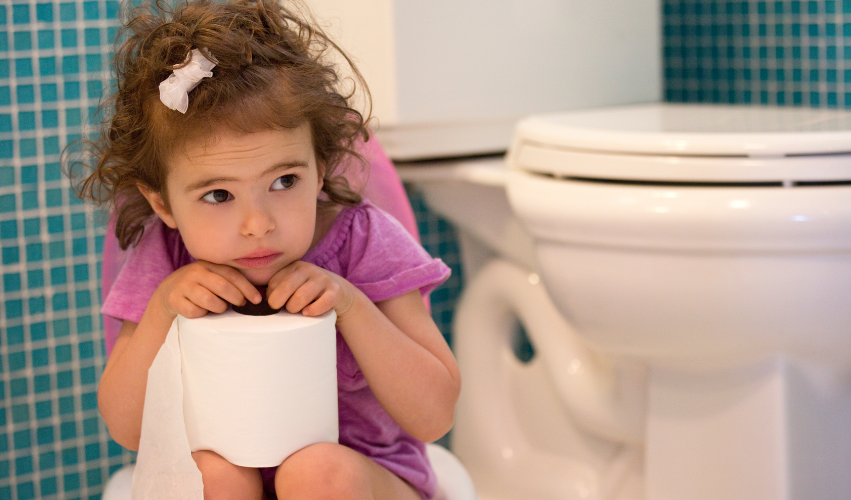
Toileting challenges are more common than many families realise, and they can affect a child’s confidence, comfort, and emotional wellbeing.
While some children transition to toileting with ease, others find it confusing, overwhelming, or even frightening.
Why toileting feels so big for children?
1. The bathroom environment can feel overwhelming
Bathrooms are full of sensory input: cold tiles, bright lights, echoes, strong smells, loud flushing, and unfamiliar public toilets. For children who are sensitive, anxious, or easily overwhelmed, these sensations can activate the nervous system and make toileting feel unsafe or uncomfortable.
2. Letting go feels vulnerable
Toileting requires children to relax their bodies, release control, and tune into internal sensations — all while sitting in a space that may not feel familiar or comforting. For many children, the shift from a nappy or potty to the big toilet can feel especially scary. The height, the size, the hole, the wobbliness of the seat, or the fear of “falling in” can make the transition feel huge.
For some children, this “letting go” can feel exposing, especially if they have had past pain, constipation, or accidents. When their body remembers discomfort, their nervous system steps in to protect them, often through avoidance, holding, or refusing.
3. It involves separation and independence
Using the toilet is one of the earliest tasks where children are expected to separate from parents, manage their bodies, and follow multi‑step routines. For children who rely on closeness or co‑regulation, this sudden expectation of independence can feel big.
4. Children’s bodies and brains are still learning to coordinate
Toileting requires:
- recognising body signals
- pausing play
- planning ahead
- getting to the toilet in time
- managing clothing
- sitting still long enough to relax
These are developmental skills, and many children simply need more time.
5. Past discomfort can create fear or avoidance
Constipation, painful poos, UTIs, or a single frightening experience (like falling in, loud flushing, or being rushed) can create strong associations. Children may then avoid the toilet to protect themselves from what they think might happen again.
6. Toileting can become tied to power and control
For some children, toileting becomes one of the few areas where they feel they have control. Holding, refusing, or delaying can be a way of expressing autonomy, especially during times of change, stress, or big emotions.
7. Worries get louder when the pressure rises
When children sense urgency, frustration, or shame from adults, their nervous system becomes more activated. This makes it harder to relax their muscles, tune into their body, or feel safe enough to try.
8. Growing body awareness makes privacy feel important
As children become more conscious of their bodies, toileting can start to feel private, personal, or even vulnerable. Many early‑learning settings have open‑door toilets, shared bathroom spaces, or limited privacy, and this can feel uncomfortable for children who prefer quiet, enclosed, or predictable environments.
Some children worry about being seen, overheard, or rushed. Others feel unsure about wiping, managing clothing, or navigating busy bathrooms. This growing awareness of their bodies and surroundings can make them avoid toileting at kindy, school, or anywhere that doesn’t feel private or safe enough.
9. Sensory experiences play a big role
Toileting is a full‑body sensory experience, and for many children, those sensations can feel intense, unpredictable, or uncomfortable. The feeling of the toilet seat, the temperature of the room, the echo of the bathroom, the smell, the sound of flushing, the sensation of wiping, or even the feeling of letting go can all activate a child’s sensory system.
Children who are sensory‑seeking may struggle to sit still long enough to relax their muscles. Children who are sensory‑sensitive may avoid the toilet because the sensations feel “too much.” When a child’s sensory system is overwhelmed or dysregulated, toileting becomes harder, not because they are unwilling, but because their body is working overtime to cope.
10. A cycle can form that reinforces more anxiety and avoidance
When toileting feels hard, children often begin to hold, avoid, or delay — which can lead to constipation, discomfort, or accidents. These experiences then increase their worry, making them even more hesitant to try next time. Over time, a loop can form: discomfort leads to avoidance, avoidance leads to more discomfort, and the cycle continues.
How toileting difficulties show up in children
Toileting challenges can show up in many different ways, including:
- Withholding wees or poos — especially during kindy or school
- Only wanting to use a nappy, even if they have used the toilet previously
- Refusing to sit on the toilet or becoming distressed when asked
- Avoiding the bathroom altogether
- Holding all day and then rushing urgently at home
- Frequent accidents or sudden regression after progress
- Fear of flushing, loud noises, smells, or public toilets
- Needing a parent present to feel safe
- Becoming upset, ashamed, or overwhelmed after accidents
- Constipation or painful bowel movements
- Bedwetting beyond the expected age
- Anxiety around toileting routines or transitions
- Difficulty recognising body signals (interoception challenges)
- Wanting specific routines, positions, or supports to feel comfortable
- Emotional meltdowns linked to toileting expectations or pressure
Practical child‑friendly tips for toileting
Toileting works best when it feels safe, predictable, and pressure‑free. These child‑friendly strategies can help make the process calmer and more successful:
1. Create a predictable routine
Regular toileting times (after meals, before leaving the house, before bath) help children learn what to expect and reduce the pressure of “trying on demand.”
2. Keep the bathroom environment calm and comfortable
Warm the room, dim the lights if needed, use a footstool for stability, and add a soft seat insert. Small changes can make the space feel safer.
3. Use simple, supportive body-based language
Use calm, supportive phrases like ‘Your body will tell you when it’s ready.’ This helps children feel safe, reduces performance pressure, and strengthens their awareness of their own body.
4. Offer choices to support autonomy
Children feel more in control when they can choose:
- which toilet to use
- whether the door is open or closed
- which book or toy to hold
- which step of the routine to start with
Choice reduces power struggles and increases cooperation.
5. Support their sensory needs
Some children need quiet, dim spaces; others need movement or fidget toys to help their body relax. Notice what helps your child feel regulated.
6. Make sitting time short and positive
Aim for 1–3 minutes rather than long, stressful sits. A timer, bubbles, or a simple game can help their body relax without pressure.
7. Use visual supports or social stories
A simple picture sequence or story can help children understand the steps and feel more confident about what comes next.
8. Practice away from the pressure
Let children explore the bathroom, sit on the toilet with clothes on, or practise flushing when they feel ready. Play‑based exposure builds familiarity.
9. Celebrate effort, not output
Praise trying, sitting, noticing body signals, or walking to the bathroom, not just wees or poos. This keeps the focus on learning, not performance.
10. Stay calm and connected during accidents
Accidents are part of learning. A calm, matter‑of‑fact response (“Let’s get you cleaned up”) helps reduce shame and keeps the nervous system regulated.
11. Support toileting at kindy or school
Talk with educators about:
- regular reminders
- access to toilets
- allowing your child to go when they feel ready
- reducing pressure or embarrassment
This is especially important for children who withhold during the day.
12. Keep nappies available if needed
Some children need a gradual transition. Allowing a nappy for poos or for certain environments can reduce anxiety while you build confidence step by step.
13. Address constipation early
If poos are painful, hard, or infrequent, speak with your GP. Medical support is often essential for progress.
For more information…
For more information and resources on children and toileting:
ERIC: The Children’s Bowel & Bladder Charity (UK) – A leading evidence‑based resource for constipation, soiling, bedwetting, toilet refusal, and continence support.
Raising Children Network (Australia) – Government‑funded, medically reviewed information on toileting, child development, behaviour, and family wellbeing.
Royal Children’s Hospital Melbourne – Kids Health Info – Clear, medically reviewed factsheets on constipation, soiling, bladder issues, and toileting concerns.
Occupational Therapy Helping Children – Article “What To Do When They Refuse to Poo“
🌼 A Note From Me…
If your child is experiencing toileting challenges, the first step is always to rule out any medical concerns. Constipation, urinary tract infections, and other physical factors can significantly affect toileting comfort and confidence. A GP or paediatrician can help determine whether there is a medical component that needs attention.
Once medical issues are ruled out, the focus shifts to supporting your child through the toileting process in a calm, encouraging, and shame‑free way. Children learn best when they feel safe, connected, and understood — not rushed or pressured.
It’s also important to remember that toileting difficulties are rarely “just” about the toilet. There are many underlying reasons why a child may struggle, including:
- Anxiety – fear of the toilet, flushing, smells, or having an accident
- Sensory needs – discomfort with the bathroom environment or underwear
- Confidence – feeling unsure, overwhelmed, or worried about getting it wrong
- Power and control – using toileting as a way to express autonomy
- Developmental readiness – some children simply need more time
In my work, I look closely at these underlying needs so we can understand why toileting feels hard, and then support your child in a way that feels gentle, respectful, and developmentally appropriate.
If you have concerns about your child’s toileting and would like to talk it through, you are welcome to get in touch with me here.

Renee Irving Lee
APPTA registered Child Play Therapist (TM)
Master of Child Play Therapy | Grad Cert Positive Psychology | BEd(Special Education)
Other Playful Minds Articles….
Term 4: Spots Available
If you’re wondering whether your child is ready for big school or might benefit from another year in kindy, this page walks you through the core skills that matter most — and how Playful Minds help children build them.


Early Intervention: Why Starting Early Matters More Than You Think
Early intervention provides timely support during the most important years of brain development, helping children build healthier patterns that shape their future wellbeing.

How to Support a Child to Develop Emotional Regulation
Discover how children develop emotional regulation through body awareness, emotional understanding, theory of mind, and co‑regulation. Learn practical ways caregivers can support healthy emotional development.

Why does Play Therapy work better than teaching strategies?
Teaching strategies often fail when children are dysregulated. Play therapy works because it engages the whole brain, builds regulation through connection, and creates effortless repetition inside meaningful play.

A Parent’s Checklist for Understanding Challenging Behaviour
When behaviour becomes challenging, it can feel overwhelming to figure out what’s really going on. Maslow’s Hierarchy of Needs offers a simple, structured way to look beneath the surface. The model explains that children can only access higher‑level skills like emotional regulation, cooperation, and problem‑solving when their foundational needs are supported. By working through the…

Preparing Your Child for a Medical Procedure: A Calm, Practical Guide for Parents
Preparing a child for a medical procedure can feel daunting, but the right support can make the experience calmer and more predictable for both parent and child. When adults feel informed and grounded, children naturally borrow that sense of safety. This guide walks you through practical ways to prepare yourself, help your child understand what…

Why Sharing Is So Hard for Children (and How We Can Support Them)
Sharing looks simple from the outside, but for children it’s a deeply complex developmental skill. It asks them to regulate their bodies, understand another person’s perspective, and let go of something that feels precious or even part of themselves. In this article, we explore why sharing is so hard for children, and how gentle, supportive…

Helping Children Take Medicine: A Playful, Connected Approach
Learn why children refuse medicine and how to help them take it calmly and confidently. Includes playful techniques and guidance for children with medical trauma.

The Three Relationships That Shape School Refusal in Early Childhood
School refusal and separation anxiety in early childhood often stem from three key relationships in a child’s world: their connection with school, their home environment, and their relationship with themselves. When these areas are supported, children separate more confidently.

The Science of School Readiness: Rethinking What It Really Means to Be School Ready
A science‑backed look at what school readiness really requires – and why pretend play builds the developmental foundations children need far more than any checklist.
Leave a Reply