
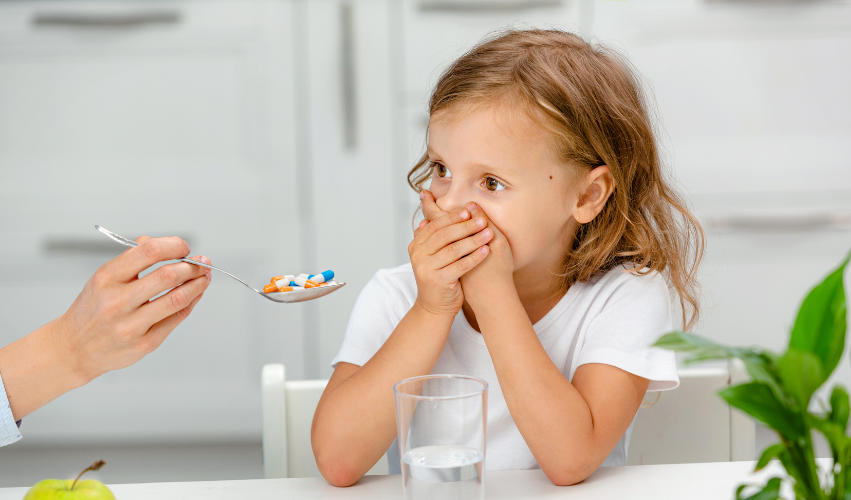
Taking medicine can be one of those surprisingly tricky parenting moments. Even when children need medication to feel better, the process can trigger stress, resistance, and sometimes full‑blown meltdowns. Understanding why children struggle, and how to use playful, connected strategies can transform medicine time from a battle into a moment of teamwork.
Why Children Don’t Like Taking Medicine
Children’s nervous systems, sensory experiences, and past memories all shape how they respond to taking medicine. Common reasons for medicine refusal include:
- Stronger taste sensitivity Children have more taste buds than adults, especially for bitter flavours. This makes medicine taste and smell far more intense and unpleasant.
- Sensory overwhelm Texture, temperature, and the physical sensation of swallowing can feel uncomfortable or unfamiliar. Some children gag easily or feel anxious about swallowing liquids or pills.
- Stress contagion from adults Children co‑regulate with their caregivers. If a parent is anxious, frustrated, or bracing for a struggle, the child’s nervous system picks up on that stress and becomes more resistant.
- Previous negative experiences Being held down for medicine, medical procedures, or vaccinations can create fear conditioning. The child’s body remembers the distress and reacts before the medicine even appears.
- Loss of autonomy Being told “you have to take this now” can trigger a power struggle, especially for children who value independence or are already dysregulated.
- Feeling unwell When children are sick, tired, or overwhelmed, their capacity for cooperation drops
Tips for a Calm, Connected Approach to Medicine Time
1. Be calm, confident, and clear
Children borrow your nervous system. A steady tone helps them feel safe. You might say: “I know medicine has been tricky before, but I’ve found a way to make it easier for your body today.”
This acknowledges their past experience while signalling that things will be different.
2. Numb the taste
Use an ice cube or icy pole to dull taste buds before giving the medicine. Cold numbs the tongue, reduces bitterness and makes swallowing easier.
3. Choose the delivery method
- Use a syringe for liquid medicine (aiming toward the cheek, not the throat).
- Or mix the medicine into a favourite drink if your pharmacist confirms it’s safe.
Offering the child a choice (“syringe or drink?”) can increase cooperation.
4. Use small doses with flavour chasers
Give tiny amounts of medicine followed by either:
- a sip of their favourite drink
- a suck of the icy pole
- a taste of jam, syrup, chocolate, or strong cheese
This breaks the task into manageable steps and reduces overwhelm.
5. Hold the nose
Encourage your child to hold their nose while swallowing. This reduces the smell and taste intensity.
6. Alternate medicine + favourite flavour
A rhythm helps: ice→ medicine → sip → ice →medicine → sip. Predictability reduces anxiety and keeps the child engaged.
Playful Ways to Help Children Take Medicine
Play is a child’s first language. When you bring play into medicine time, you shift the experience from fear to connection.
1. Teddy Takes Medicine First
Use your child’s favourite teddy or doll. Pretend to be the doctor and show the teddy how to take the medicine. Then alternate: teddy gets a “dose,” then your child gets theirs. This creates safety through modelling and shared experience.
2. Toy Tea Party
Gather the toys for a tea party. Each toy “tries” their medicine (pretend), and your child joins in. This turns medicine into part of a social, imaginative routine.
3. Potion Master
Let your child mix a tiny cup of coloured water (or combination of drinks) and call it their “potion.” After taking the medicine, they drink the potion to “activate” it. This gives them agency and makes the process magical.
4. Doctor Role‑Play
Let your child be the doctor and “give” you or a toy pretend medicine first. Role reversal reduces anxiety and increases confidence.
5. Sticker Story Chart
Instead of a sticker reward chart, create a story: Each dose earns a sticker that builds a picture — a rocket, rainbow, treasure map. This makes progress visual and meaningful. (You can purchase simple paint by sticker books from Amazon)
6. The Medicine Song
Create a short, silly jingle you sing only during medicine time. Predictability + novelty = cooperation.
7. Koala Cuddle Position
Sit your child on your lap facing outward like a koala. This provides grounding, connection, and gentle containment without restraint.
For more information and support around taking medicine for children:
Children’s Health Qld – Article “How to help your child take their medicine”
The Royal Children’s Hospital Melbourne – Article “How to give your child medicine”
🌼 A Note From Me…
Supporting children through medicine time is really about supporting their nervous system. When we understand their sensory world, their fears, and their need for autonomy, we can respond with compassion rather than frustration. Play gives children a safe bridge between fear and cooperation. It helps them feel in control, connected, and understood.
For some children, especially those who have been held down for procedures, experienced medical trauma, or show intense distress around taking medicine, play therapy can be incredibly helpful. At Playful Minds children can:
- re‑enact medical experiences in a safe, controlled way at their own pace
- process fear and regain a sense of power
- build coping skills through pretend play
- strengthen trust and co‑regulation with caregivers
- integrate the experience so their body no longer reacts with panic
If your child becomes highly distressed, shuts down, or panics around medical tasks, reaching out for therapeutic support can make a meaningful difference.

Renee Irving Lee
APPTA registered Child Play Therapist (TM)
Master of Child Play Therapy | Grad Cert Positive Psychology | BEd(Special Education)
Other Playful Minds Articles….

The Hidden Link Between Anxiety, Shame and Controlling Behaviour
Many anxious children appear controlling, rigid, or resistant when things don’t go to plan. Beneath these behaviours is often a child struggling with anxiety, emotional overwhelm, and a need to create safety through predictability. Understanding the connection between anxiety, shame, emotional regulation, and control can help us look beyond behaviour and respond with greater compassion.

Term 4: Spots Available
If you’re wondering whether your child is ready for big school or might benefit from another year in kindy, this page walks you through the core skills that matter most — and how Playful Minds help children build them.

Early Intervention: Why Starting Early Matters More Than You Think
Early intervention provides timely support during the most important years of brain development, helping children build healthier patterns that shape their future wellbeing.

How to Support a Child to Develop Emotional Regulation
Discover how children develop emotional regulation through body awareness, emotional understanding, theory of mind, and co‑regulation. Learn practical ways caregivers can support healthy emotional development.

Why does Play Therapy work better than teaching strategies?
Teaching strategies often fail when children are dysregulated. Play therapy works because it engages the whole brain, builds regulation through connection, and creates effortless repetition inside meaningful play.

A Parent’s Checklist for Understanding Challenging Behaviour
When behaviour becomes challenging, it can feel overwhelming to figure out what’s really going on. Maslow’s Hierarchy of Needs offers a simple, structured way to look beneath the surface. The model explains that children can only access higher‑level skills like emotional regulation, cooperation, and problem‑solving when their foundational needs are supported. By working through the…

Preparing Your Child for a Medical Procedure: A Calm, Practical Guide for Parents
Preparing a child for a medical procedure can feel daunting, but the right support can make the experience calmer and more predictable for both parent and child. When adults feel informed and grounded, children naturally borrow that sense of safety. This guide walks you through practical ways to prepare yourself, help your child understand what…

Why Sharing Is So Hard for Children (and How We Can Support Them)
Sharing looks simple from the outside, but for children it’s a deeply complex developmental skill. It asks them to regulate their bodies, understand another person’s perspective, and let go of something that feels precious or even part of themselves. In this article, we explore why sharing is so hard for children, and how gentle, supportive…

The Three Relationships That Shape School Refusal in Early Childhood
School refusal and separation anxiety in early childhood often stem from three key relationships in a child’s world: their connection with school, their home environment, and their relationship with themselves. When these areas are supported, children separate more confidently.

The Science of School Readiness: Rethinking What It Really Means to Be School Ready
A science‑backed look at what school readiness really requires – and why pretend play builds the developmental foundations children need far more than any checklist.
Leave a Reply